
Updated
The Career Change Resume: Pivot Without Starting Over
You are not starting from zero — you are translating. A career change resume wins by reframing what you have already done into the language of the industry you want. Here is the exact process, with before-and-after examples.
6 Steps to a Convincing Career Change Resume
Lead with a career-change objective, not an apology
The top of your resume must answer the recruiter's first question — why is a restaurant manager applying for this HR job? — before they ask it. Two sentences: the proven strengths you bring, and the specific role you are targeting. Confident and forward-looking, never defensive about the pivot.
Use the combination resume format
Open with a strong Skills or Core Competencies section organized around the target job's requirements, then list your work history below in reverse-chronological order. This lets relevant abilities lead while keeping the honest timeline recruiters expect. A purely functional (no-dates) resume reads as hiding something — avoid it.
Mine the job description for your skill translation
List every requirement in the target posting, then match each to something you have genuinely done, whatever context it happened in. Managing a dinner rush is operations under pressure; running a classroom is training and stakeholder management; handling angry customers is de-escalation and retention. The skill is real — only the vocabulary changes.
Rewrite every bullet in the new industry's language
Your old bullets were written for your old industry. Strip the jargon, keep the numbers, and reframe each achievement around the transferable skill it proves. Recruiters in the new field should recognize their own vocabulary in your resume.
Add proof you are serious about the new field
Certifications, courses, freelance projects, volunteering, a portfolio — anything that shows the pivot is a decision, not a whim. A $300 certificate or one real freelance project often does more for a career changer than rewriting the summary five times, because it converts intent into evidence.
Cut what does not transfer
Career-change resumes fail from clutter more than from gaps. That award for old-industry excellence, the deep technical skills of your former specialty — if it does not support the new target, it is noise. Be ruthless: relevance is the only filter.
Bullet Rewrites: Same Experience, New Industry
Nothing below is invented — the facts stay identical. Only the framing and vocabulary change to match what the new industry values.
Taught 9th grade English to five class sections and graded assignments
Designed and delivered daily instruction for 150 learners, using assessment data to adapt content and improve outcomes 28% year over year
Ran the store and managed employees and inventory
Directed daily operations for a $2.1M location — scheduling 25 staff, controlling shrink to 0.8%, and holding labor costs 5% under budget
Waited tables and recommended menu items to guests
Drove the section's highest per-check revenue for 8 straight months through consultative recommendations and upselling, in a 200-cover-per-night environment
Led a logistics squad and was responsible for equipment
Planned and executed supply operations for a 120-person unit, managing $4M in assets at 100% accountability under hard deadlines
Transferable Skills You Probably Already Have
These six skills appear in job postings across nearly every industry. If you have done the work in the right column, you can honestly claim the skill on the left.
Shift lead, head server, squad leader, classroom teacher, volunteer coordinator
Store manager, household/PTA treasurer, event organizer, department head
Retail, hospitality, teaching (parents), healthcare (patients), sales of any kind
Any role where you trained new hires, mentored, tutored, or precepted
Grade tracking, inventory counts, sales reports, quality metrics, scheduling optimization
Anywhere you made something faster, cheaper, safer, or less error-prone — with a number
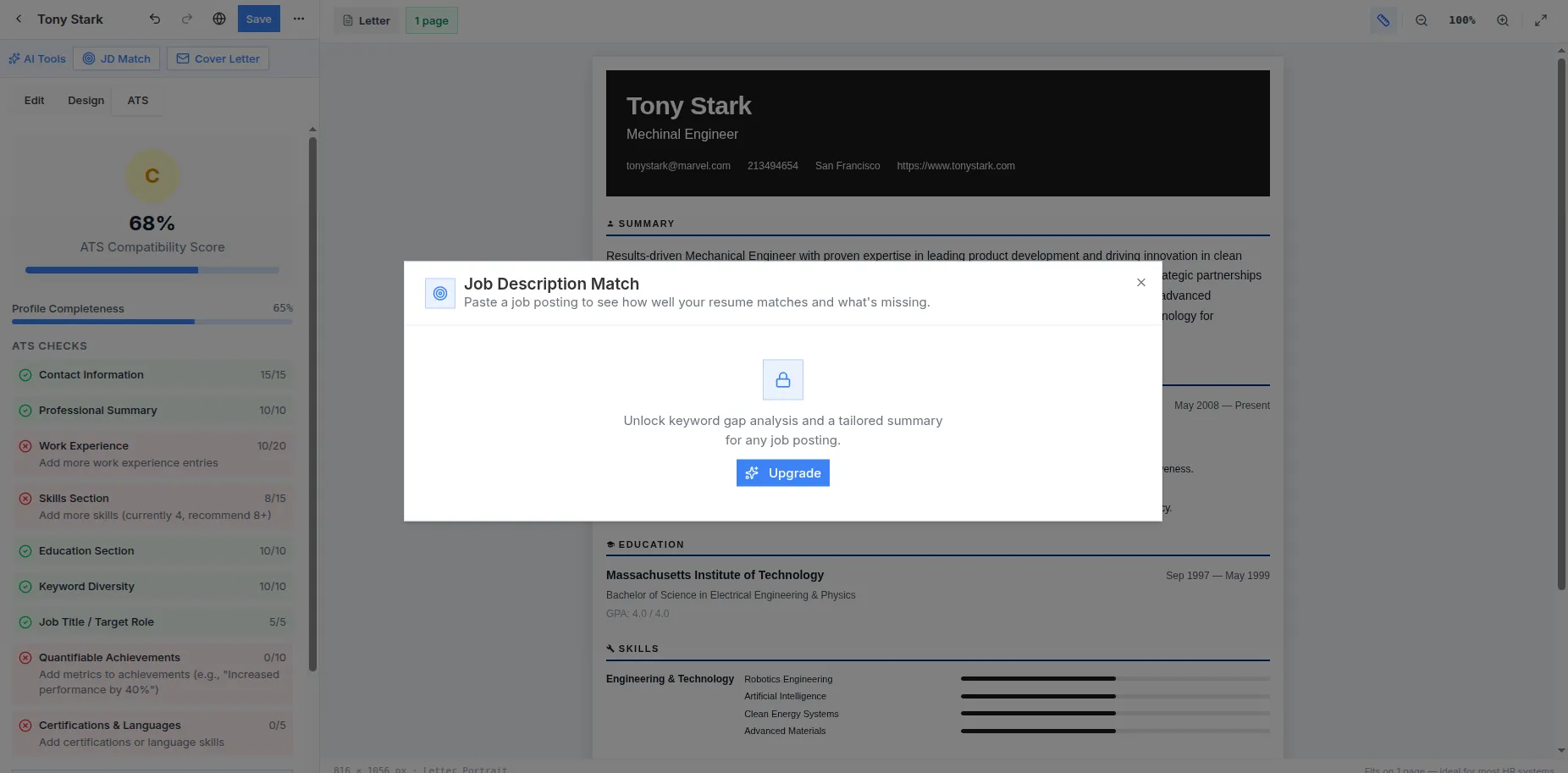
Real screenshot from the live app — sign in free and build yours
Rebuild Your Resume for the New Direction
One Simple Resume makes the pivot practical: reorder sections for a combination format, keep multiple tailored versions, and check every draft against the ATS — free, no account needed.