
Updated
25 Job Search Tips That Actually Work in 2026
From finding unadvertised roles to negotiating your offer — a complete, no-fluff job search guide for every stage of the process. These are strategies that work in the real modern job market, not advice from 2015.
Before You Apply
Get Clear on What You Want
Spray-and-pray applications have terrible ROI. Define your target: 3–5 specific job titles, 5–10 target companies, preferred industry and company size, required salary range and location flexibility. Clarity lets you write tailored applications faster, network more specifically, and evaluate offers confidently.
Optimize Your LinkedIn Profile Before You Apply Anywhere
85% of jobs are filled through networking and LinkedIn is the primary professional network. Before sending a single application, make sure your profile photo is professional, your headline goes beyond job title ("Software Engineer who builds high-scale payment systems"), your About section tells your story, and your experience matches your resume.
Audit Your Online Presence
Hiring managers Google candidates. Search your own name and review what appears. Clean up or make private any social content that could hurt you. If you have a professional portfolio, personal website, or GitHub, make sure it's polished and linked from your LinkedIn and resume.
Prepare Your Documents Before You Need Them
Have a master resume, 2–3 tailored version templates, a cover letter base, your references list, and your portfolio ready before you start applying. Rushing these under application pressure leads to careless errors and generic content.
Research Salary Ranges First
Know your market rate before any conversation about compensation. Use Levels.fyi for tech, Glassdoor, LinkedIn Salary, Payscale, and industry-specific surveys. Knowing your range prevents you from undervaluing yourself or wasting time on roles that can't meet your requirements.
Finding Jobs
Target the Hidden Job Market
70% of jobs are never publicly posted. Companies prefer internal referrals, recruiter placements, and known candidates. Most people compete for the visible 30%. Your goal is to access the hidden 70% through networking, direct outreach to managers, and building relationships before openings appear.
Use Job Boards Strategically — Not Obsessively
LinkedIn, Indeed, Glassdoor, and company career pages are useful for market research and some applications. But spending all your time on job boards and zero time networking is a losing strategy. Set a rule: for every 3 applications from job boards, make 1 direct networking outreach.
Set Up Job Alerts, Don't Browse Daily
Set up email alerts for your target roles on LinkedIn, Indeed, and company career pages. Check once a day — not hourly. Constant checking creates anxiety without increasing opportunity. The alerts ensure you don't miss new postings without it consuming your day.
Apply Within 48 Hours of a Job Posting
Many roles receive 200+ applications within the first 3 days. Applications submitted in the first 48 hours are significantly more likely to be reviewed. For roles that close quickly, same-day application is ideal. Job alerts are your early-warning system.
Target Companies, Not Just Job Postings
Make a target company list of 10–20 companies you'd genuinely want to work for. Follow them on LinkedIn, track their news, connect with employees, and check their careers page regularly — even when they don't have a perfect opening. Proactive interest often leads to opportunities before they're posted.
Networking That Works
Networking Is Information Exchange, Not Begging for Jobs
The biggest mistake people make is asking contacts for a job. Instead, ask for information, advice, and introductions. "Do you have 20 minutes to share what it's like working at [Company]?" creates a genuine conversation. Jobs often emerge naturally from these relationships — without you ever asking directly.
Use LinkedIn to Find Warm Connections at Target Companies
For each target company, look for second-degree connections (friends of friends). Ask your mutual connection for an intro, or reach out directly noting the shared connection. Second-degree warm outreach gets a much higher response rate than cold messages.
Write Short, Specific LinkedIn Connection Requests
"I'd like to add you to my professional network" is ignored. "I'm a software engineer transitioning into ML. I saw your work on [specific project] and would love to ask about your experience at [Company]. Happy to keep it to a 15-min call." gets responses.
Follow Up Once — Then Let It Go
If you don't hear back from a networking message within 7–10 days, send one brief follow-up. After that, let it go. Persistent follow-up crosses into annoyance. Some people respond months later — and that's fine. Keep your pipeline wide so you're not depending on any one person.
Attend Industry Events, Even Virtually
Conferences, meetups, webinars, and workshops put you in the room with people who know about unadvertised opportunities. Introduce yourself, exchange contact info, and follow up the next day with a personalized message. Even one meaningful connection per event compounds over a job search.
Application Strategy
Tailor Every Application — At Minimum the First Paragraph
You don't need to rewrite your entire resume for every application. But you do need to customize your cover letter opening, reorder or reword 2–3 bullet points to mirror the job's priorities, and ensure your skills section reflects the posting's key terms. 20 tailored applications beat 200 generic ones every time.
Track Every Application in a Spreadsheet
Track: company, role, date applied, contact, application status, next action, and follow-up date. Job searching without tracking is chaos. A spreadsheet lets you follow up at the right time, identify patterns in your success rates, and avoid the embarrassment of double-applying.
Follow Up 5–7 Business Days After Applying
A brief, professional follow-up email to the recruiter or hiring manager — if you can find their contact — signals genuine interest and keeps you top of mind. Most candidates don't follow up. The ones who do are memorable.
Apply to Roles Where You Meet 60–70% of Requirements
Job descriptions are wish lists. Companies routinely hire candidates who don't meet every requirement. If you meet 60–70% of the hard requirements, apply. The "perfect candidate" usually doesn't exist — the hire goes to the best candidate who applied.
Interviews & Offers
Prepare STAR Stories in Advance
Behavioral interview questions ("Tell me about a time when...") are common and predictable. Prepare 8–10 STAR (Situation, Task, Action, Result) stories from your experience. Map them to common themes: leadership, conflict, failure, success, collaboration, technical problem-solving. Practice saying each aloud.
Research Your Interviewers on LinkedIn
Before every interview, look up each person you'll speak with. Know their background, what they've worked on, and how long they've been at the company. This lets you ask more thoughtful questions and build rapport through shared context.
Always Send a Thank-You Within 24 Hours
A personalized thank-you email after every interview sets you apart from candidates who don't send one. Reference something specific from the conversation. Keep it to 3–5 sentences. Thank the person, restate your interest in the role, and note what you're most excited to contribute.
Never Accept or Decline an Offer on the Spot
It's always acceptable to say "I'm very excited about this — can I have 24–48 hours to review?" Use that time to evaluate compensation against your research, consider competing offers, and ensure you're making the decision from a clear head rather than the excitement of an offer.
Negotiate — Almost Everyone Leaves Money on the Table
The initial offer is almost never the final offer. Negotiating professionally and politely rarely results in an offer being rescinded. Provide a specific counter with market data: "Based on my research and experience level, I was targeting $X. Is there flexibility there?" Even a 5% increase compounds significantly over a career.
Maintain Momentum — Don't Stop the Process for One Interview
Continue applying and networking even when you have promising interviews in progress. Opportunities fall through for reasons outside your control. Keeping your pipeline active ensures you never depend on any single outcome, and often produces better offers when companies know you're in demand.
Weekly Job Search Checklist
Structure your job search week with these activities:
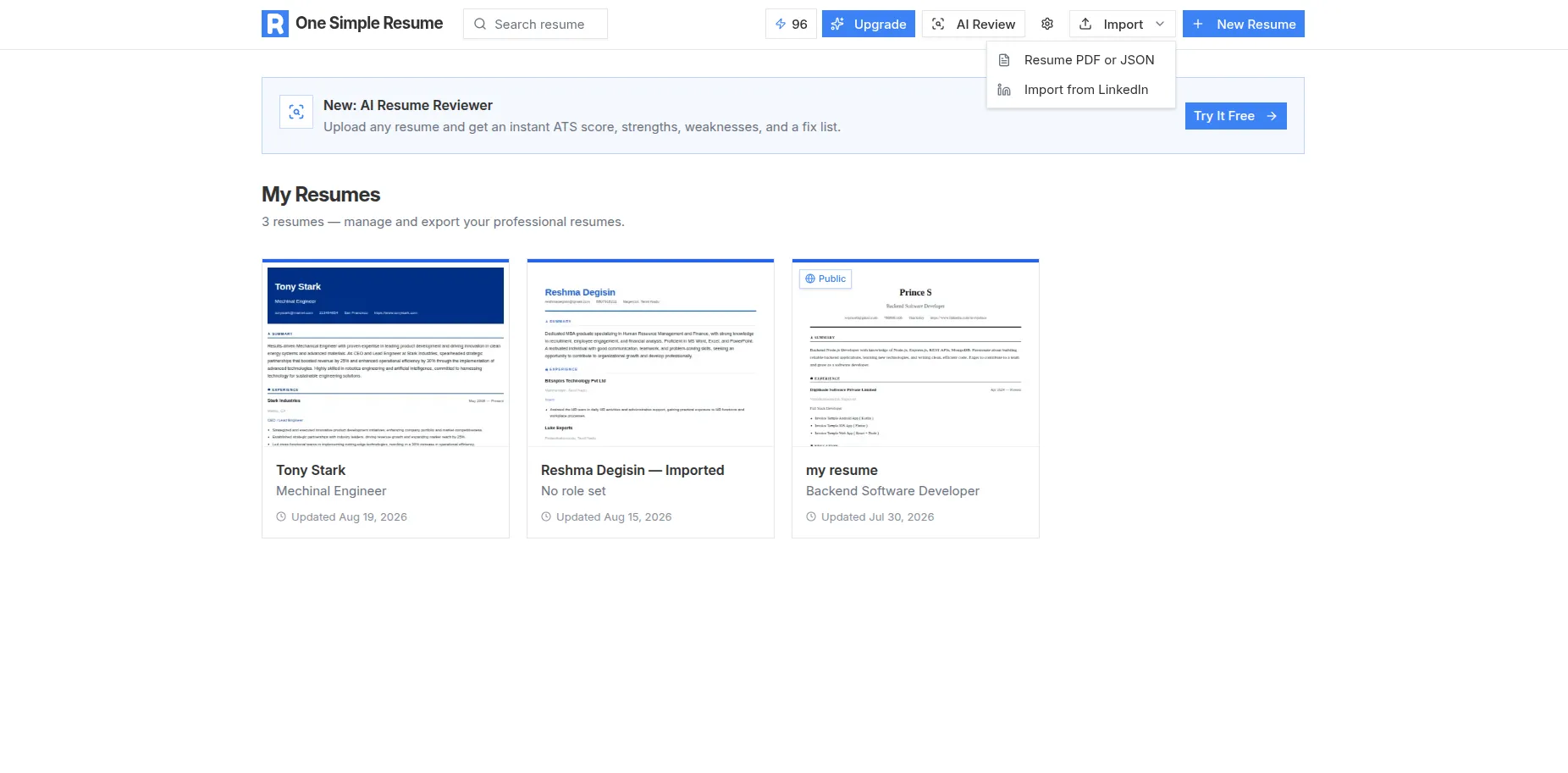
Real screenshot from the live app — sign in free and build yours
Start With a Strong Resume
Every job search strategy above works better with a polished, ATS-optimized resume. Build yours free with One Simple Resume — 17+ templates, AI tools, and real-time ATS scoring.